When you're tackling a drywall ceiling, a rolling lift can be the difference between a two-person struggle and a one-person task. But not all lifts offer the same reach. This head-to-head comparison looks at the 16FT WCH Drywall Lift and the 11FT Drywall Lifter Panel Hoist, focusing on listed prices, stability features, and which one fits the ceiling heights you typically work with.
Quick Verdict
For taller ceilings, the 16FT WCH Drywall Lift is the obvious choice thanks to its extended reach and wide wheelbase. For standard residential ceilings, the 11FT Drywall Lifter offers enough height, a smaller footprint, and a few extra adjustment features. Your ideal pick depends on ceiling heights and job site space.
At a Glance
The table below summarizes the key specs from the two listings.
| Feature | 16FT Drywall Lift (WCH) | 11FT Drywall Lifter |
|---|---|---|
| Listed price | USD 158.99 | USD 152.98 |
| Price bar | ||
| Maximum reach | 16 ft | 11 ft |
| Base / stability | Wide wheelbase | Extendable tripod base, locking casters |
| Load capacity | 150 lb | 150 lb |
| Adjustment features | Tool-free assembly | Adjustable height 52-132 in, width 49-114 in |
Where Each Lift Wins
For taller applications, the 16ft model clearly wins on reach. The 11ft unit wins on adjustability: it offers multiple adjustment points and a stable base.
Consider Your Ceilings
Before you decide, measure the highest ceiling you expect to work on. If any of your rooms have cathedral or vaulted ceilings, the longer reach is a safer bet. If you only work in rooms with 8- to 10-foot ceilings, the shorter lift keeps the panel closer to the ground and is easier to handle in tighter spaces.
16FT Drywall Lift Sheetrock Lift Drywall Rolling Lifter Panel 150LBS Jack Lift
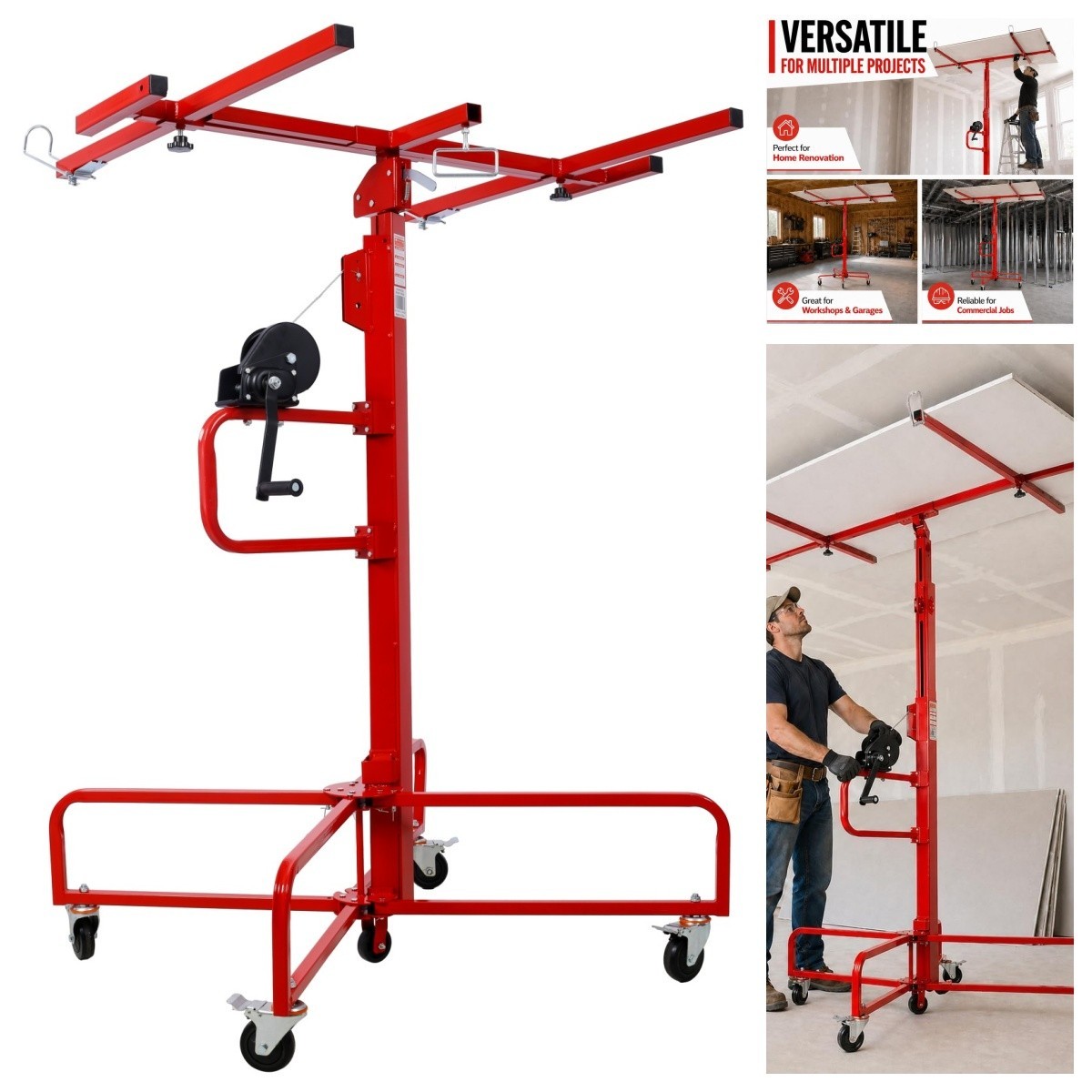
Choosing this lift comes down to reach. It is the higher-reaching model of the two, designed for ceilings that would be out of range for a standard lift. The wide wheelbase is described as providing stability, which matters when you're maneuvering a 150-pound panel overhead. The tool-free assembly means you don't need extra wrenches to set it up or break it down, a convenience when you're moving between rooms. On the flip side, the unit's assembled dimensions of 54 by 54 by 77 inches show a substantial footprint. If your work area has narrow doorways or tight corners, you'll need to account for that space. It is designed for solo operation, which makes it a solid match for DIYers taking on a tall ceiling project alone. The package size is listed as 73.22 by 18.90 by 7.70 inches, a large and heavy box that requires a clear path when you bring it into the workspace. For anyone regularly working at 12 feet or above, the extra reach of this lift is the buying reason.
11FT Drywall Lifter Panel Hoist Dry Wall Rolling Caster Lifter Construction Tool
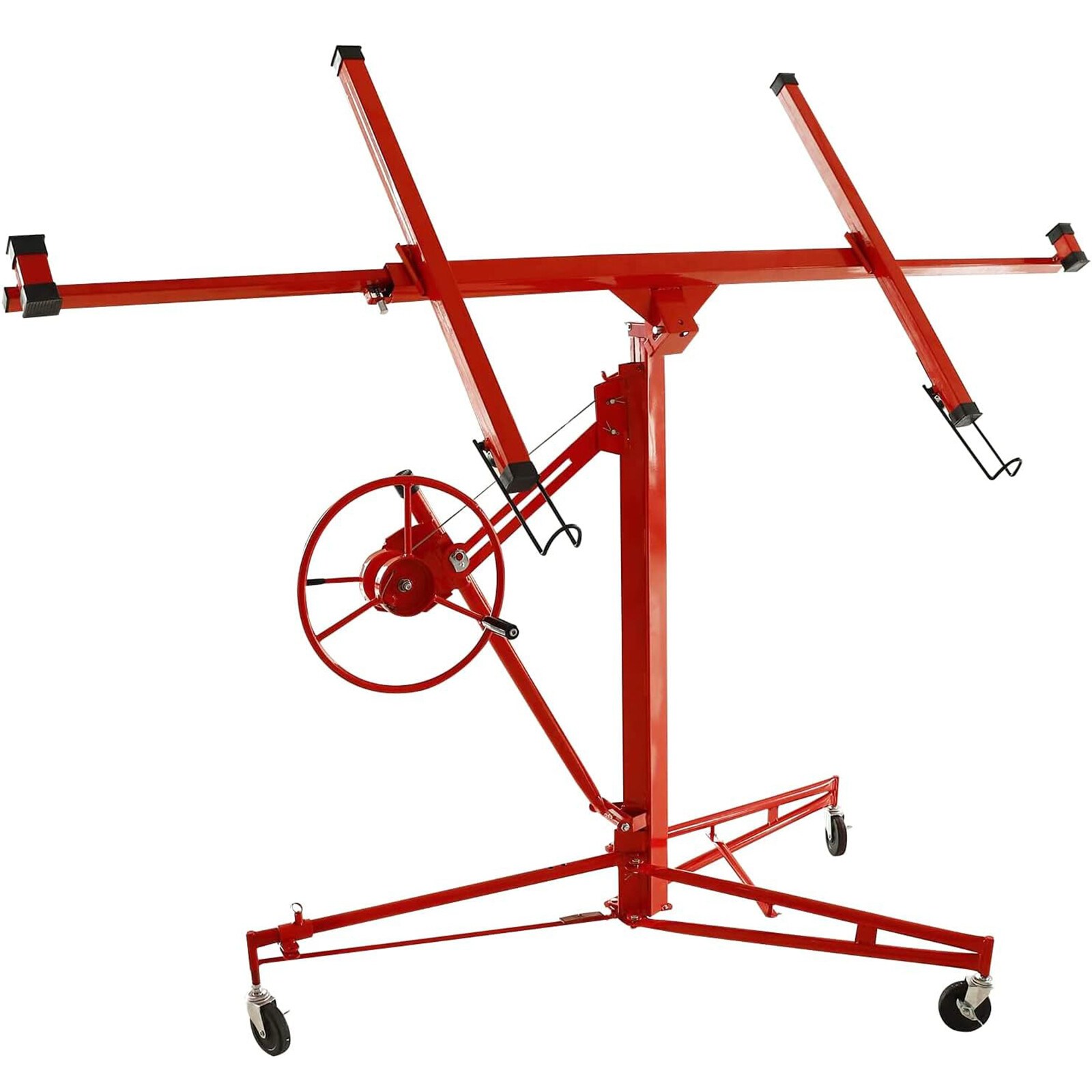
This model is the more flexible unit in terms of setup. It comes with an adjustable height range from 52 to 132 inches and an adjustable width from 49 to 114 inches, so you can fit panels of different sizes without repositioning the whole stand. The extendable tripod base and locking rubber casters are stability features, and the automatic load holding brake is a safety feature. The obvious limitation is its maximum lift height of 11 feet: when your ceiling crosses that line, this unit simply won't do the job. It is a practical choice for standard-height rooms. For trade work or home use where 11 feet is enough, it pairs a small footprint with useful adjustability. The red finish and welded steel construction are part of the build, and the cross arms measure 38 inches long. If you are working in a basement or single-story home, this lifter keeps the panel at a comfortable level.
Final Choice by Use Case
If you regularly work on tall ceilings, the 16FT WCH Drywall Lift is the best match. If your projects stay within the shorter lift's range and you value adjustability in a more compact frame, the 11FT Drywall Lifter is the right tool.