Making concrete test specimens is one of those jobs where trapped air can quietly ruin your results. A vibrating table consolidates the mix so density is consistent, but choosing the right one comes down to stability, amplitude, and how the deck handles your molds. This review focuses on the Concrete Vibrating Table, Vibration Platform, Vibration Table at USD 171.72.
Concrete Vibrating Table, Vibration Platform, Vibration Table
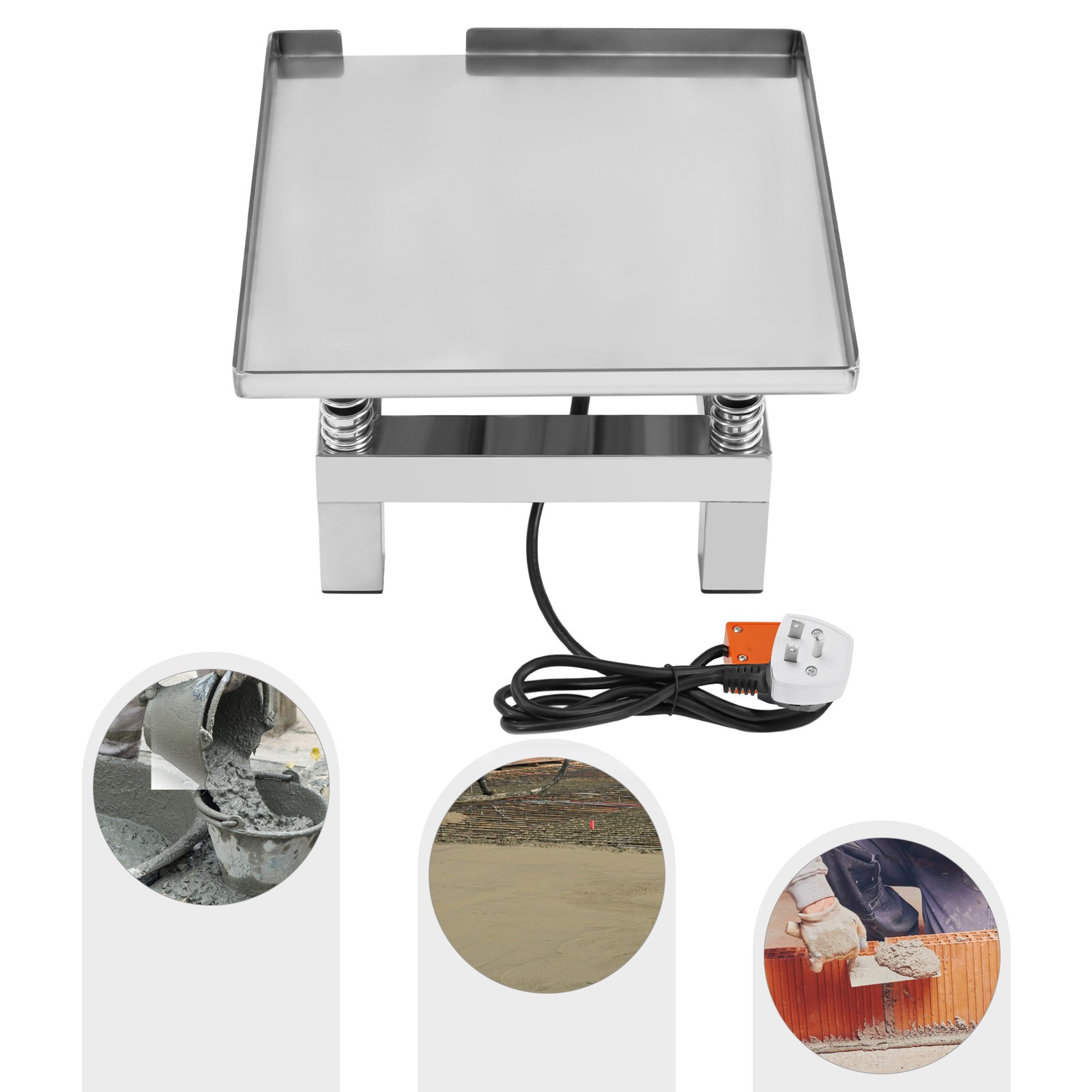
This platform has a stainless steel main structure, which suits damp cement work because it resists rust and deformation over time. Four load-bearing springs support the deck, and the vibration design uses a precise frequency with even force distribution to help air bubbles move up and out of the concrete. The amplitude range of 1-2mm is in line with compacting test blocks where you want a firm, repeatable settle. No assembly is required.
#### Quick verdict
If you are casting concrete test specimens and want a vibrating table that will hold up in a workshop or lab, this model is a practical fit. The build is geared toward regular test-block work, so it is a strong option for frequent casting sessions.
#### Who it suits
This table is aimed at technicians, masonry enthusiasts, and small-scale producers who make concrete test blocks and need consistent compaction. Because the design emphasizes stability and a sturdy structure, it suits anyone who wants repeatable density in their specimens and does not need a bulky industrial unit. The straightforward design works well in a smaller workspace too.
#### What stands out
The steel body is the first thing that stands out: it is not quick to rust or deform when you are working with wet concrete, so cleanup is more straightforward. The four load-bearing springs help spread the weight and keep the deck stable while the vibration runs. The no-assembly setup is another convenience, so you can get it working without extra tools or parts.
#### Meaningful trade-offs
The baffle height is only 2.5cm / 0.98in. That is fine for a standard test block, but taller molds will sit above the retaining lip, so you may need to keep an eye on the form during vibration. The compact dimensions are a benefit on a crowded bench, but they also mean you will work with smaller batches. The 1-2mm amplitude range is a practical match for test-block work, so plan your mixes within that range.
#### Bottom line
For concrete test block production, this vibrating table offers a durable deck built for damp concrete work, reliable air release, and a price of USD 171.72 that is easy to justify for daily or occasional batches. Weigh the low baffle and compact footprint against your typical mold sizes, and if those fit your workflow, this platform is a strong choice for denser, more consistent test specimens.