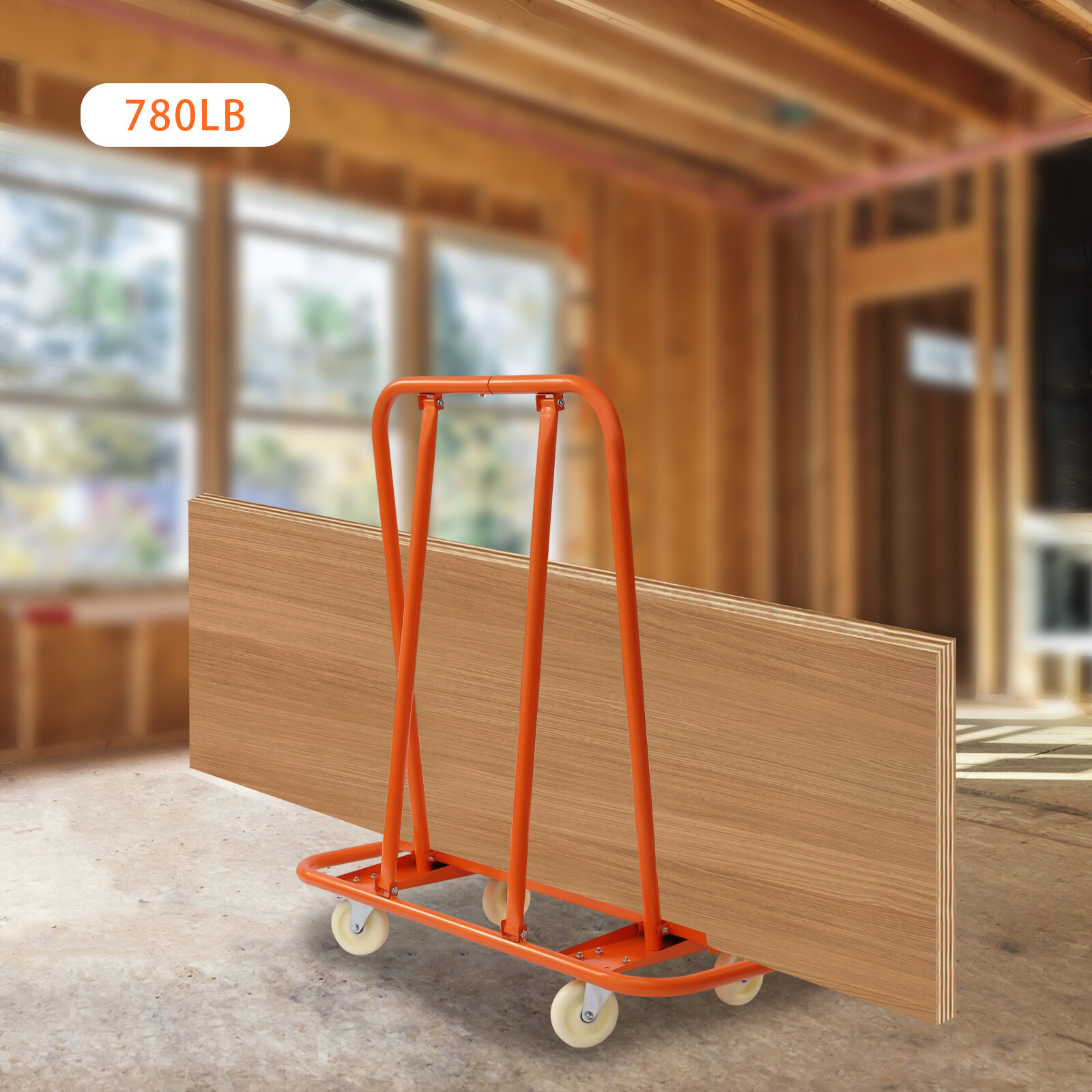
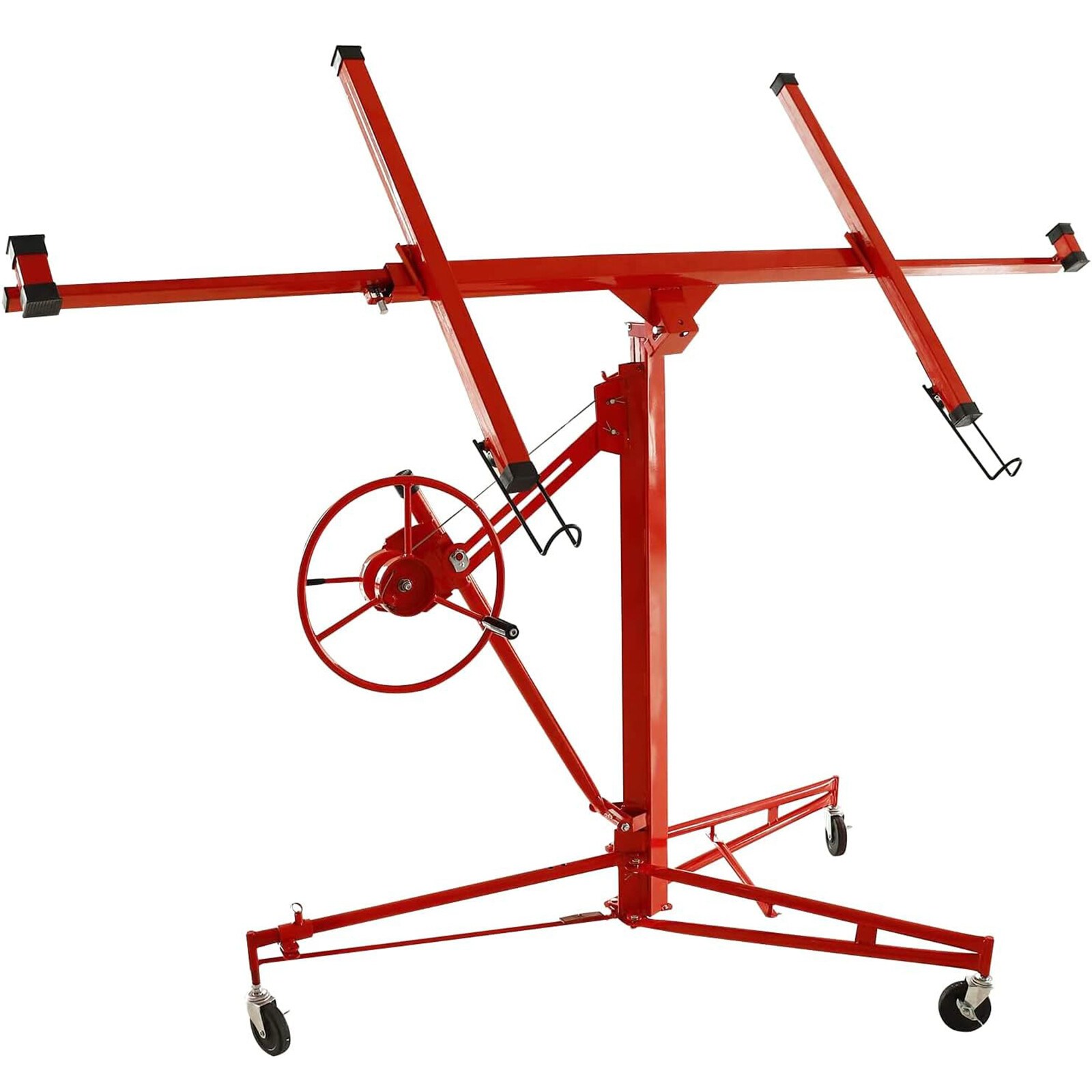
Putting up a ceiling is one of those jobs that feels like it needs three hands. A full sheet of drywall is heavy and awkward, and trying to hold it overhead while you fasten it can turn a simple room into an all-day struggle. In insulation, drywall, and ceiling systems, the two tools that solve this are a rolling panel cart and a panel hoist. The Drywall Sheet Cart with 4 Swivel Wheels and the 11-Ft Drywall Lifter Panel Hoist both take the strain off your arms, but they work at different stages of the job.
Quick verdict
If you spend most of your time moving panels from a stack to the work area, the cart is the more straightforward tool. If you need to raise a panel up to the ceiling and keep it there while you drive screws, the lifter is the one that actually does that part of the job.
Before you choose, think about the bottleneck on your jobsite. If moving panels from the truck to the workbench is the tiring part, a cart shortens that effort. If the tiring part is holding a sheet overhead while you screw it in, only a lifter can take that weight for you. Both are new, steel-framed tools with rolling bases, but they are not interchangeable.
At a glance
| Consideration | Drywall Sheet Cart (4 Swivel Wheels) | 11-Ft Drywall Lifter Panel Hoist |
|---|---|---|
| Price | USD 122.08 | USD 152.98 |
| Main job | Moving panels across the floor | Lifting panels to ceiling height |
| Load capacity | 780 lbs | 150 lb per panel |
| Wheel setup | 4 swivel wheels with brakes | Rolling rubber casters that lock |
Where each one wins
The cart wins when you are transporting material. It is built to roll panels across the floor and keep them low, which saves your arms during the walking part of the job.
The lifter wins when a panel has to go up. It is designed to raise drywall to ceiling height and hold it there while you work. For ceiling installs, that is the difference between wrestling a sheet overhead and letting a tool take the weight.
Drywall Sheet Cart (4 Swivel Wheels)
Start with the Drywall Sheet Cart if your panels are moving horizontally. The steel frame is built for hauling panel goods, and the four swivel wheels with brakes make it easy to turn a full sheet through doorways and around a jobsite. It is also the easier tool to understand: load a panel, tilt it, and roll. The trade-off is that it does not lift anything into the air. It will not get a sheet up to the ceiling, so for overhead work you would still need a second set of hands or a hoist. The cart is best judged as a transport tool rather than a positioning tool.
11-Ft Drywall Lifter Panel Hoist
The 11-Ft Drywall Lifter is the pick when the panel needs to go up. Its height range of 52 to 132 inches covers typical wall and ceiling work, and the adjustable width of 49 to 114 inches lets you match the cradle to different panel sizes. The cross arms are 38 inches long, and the automatic load holding brake helps keep a panel in position while you fasten it. The trade-off is the per-panel capacity: you work with one sheet at a time rather than a stack. For a solo drywall ceiling job, that is often exactly what you need.
Final choice by use case
- If you are hauling full sheets and stacks around the job site, choose the Drywall Sheet Cart at USD 122.08.
- If you are installing ceiling panels by yourself, choose the 11-Ft Drywall Lifter at USD 152.98.
- If your work stays on one level and you want the lower listed price, the cart is the practical match.
- If your work is overhead and you want the panel held while you fasten it, the lifter is the clear match.