When you need a new surface for a floor or patio, the first big fork in the road is material. Do you want a soft, lightweight foam mat that mimics wood grain for indoor comfort, or a solid acacia hardwood tile that can transform a patio with a real wood surface? We put two interlocking options side by side to help you decide. Both are interlocking and relatively easy to set up, but they serve very different spaces.
Quick Verdict
If you want the most coverage for the lower listed price, the Sorbus 12-Piece Foam Floor Mat covers 48 sq ft for $53.99. If you want real acacia hardwood and a premium finish for a smaller patio or walkway, the Acacia Wood Interlocking Deck Tiles give you 12 sq ft for $224.76.
Comparison Table
| Option | Price | Coverage | Material | Price Bar |
|---|---|---|---|---|
| Foam Tiles | $53.99 | 48 sq ft | Foam | |
| Acacia Deck Tiles | $224.76 | 12 sq ft | Acacia hardwood |
Where Each Product Wins
The foam mat wins on coverage and upfront cost, offering the larger area at the lower listed price. It's also lightweight and described as waterproof, so it can work in spaces where spills and moisture are a concern. The acacia deck tiles win on material and installation, offering a natural wood surface with a floating, tool-free interlocking system. The right choice depends on the surface you're covering and how much you want to spend.
Product Notes
12 Wood Grain Flooring Tiles - Interlocking Foam Floor Mat- 3/8" Thick- 48 Sq Ft
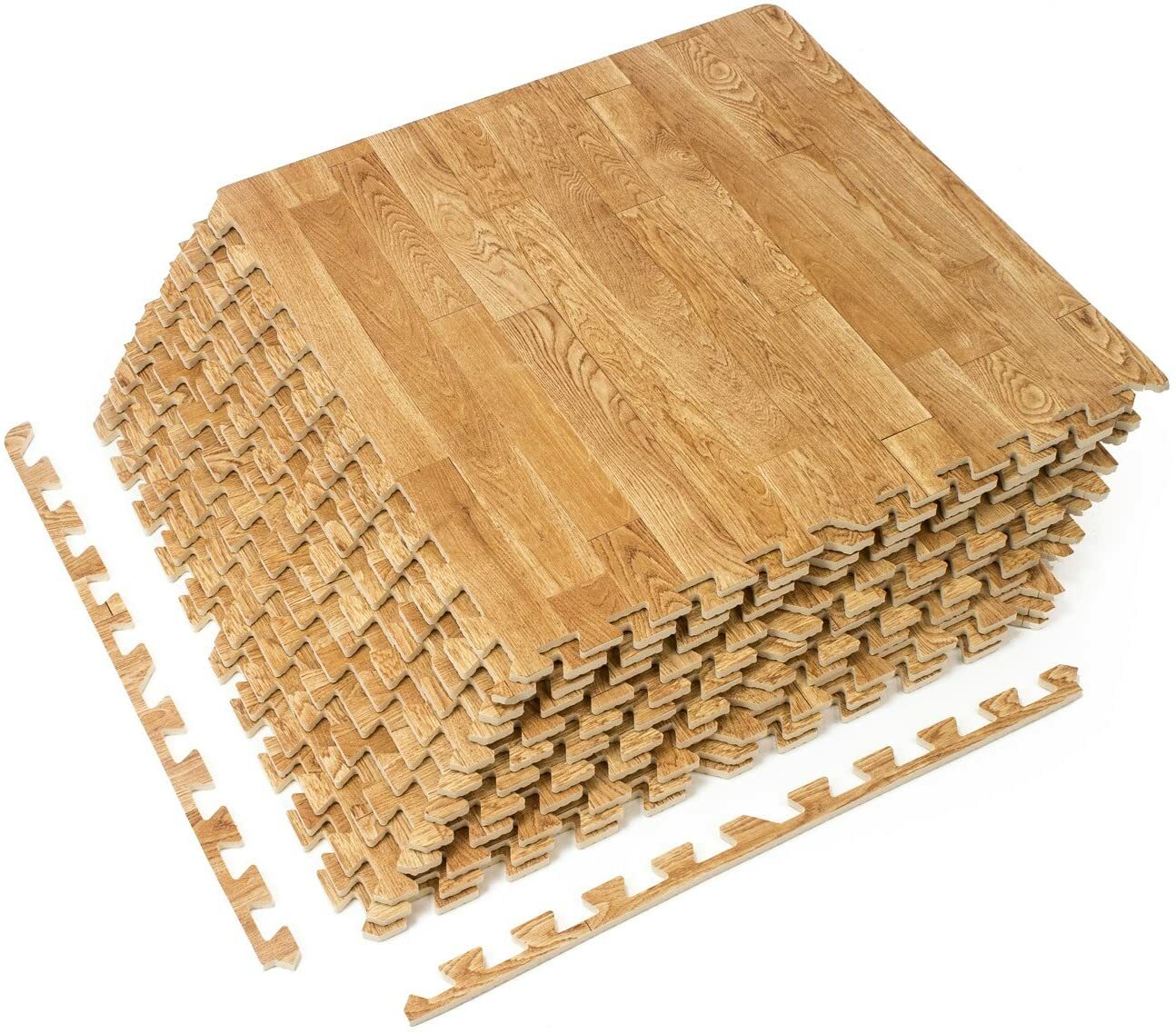
The Sorbus foam tile set gives you a large continuous floor with a pine wood-grain look at a lower listed price than the acacia set. The tiles are listed at 24 by 24 inches and 3/8-inch thick, and they are described as waterproof and non-absorbent. The no-adhesive DIY setup makes it easy to lay down a temporary or permanent floor in a playroom, home gym, or studio. The lightweight construction is a plus if you plan to reposition or store the tiles. On the downside, the foam material isn't actual wood, and the wood grain is a visual pattern. If you're looking for a genuine hardwood surface, this set won't match the texture or durability of real timber.
Acacia Wood Interlocking Deck Tiles 6-Pack for Easy Patio Flooring, 12 Sq Ft
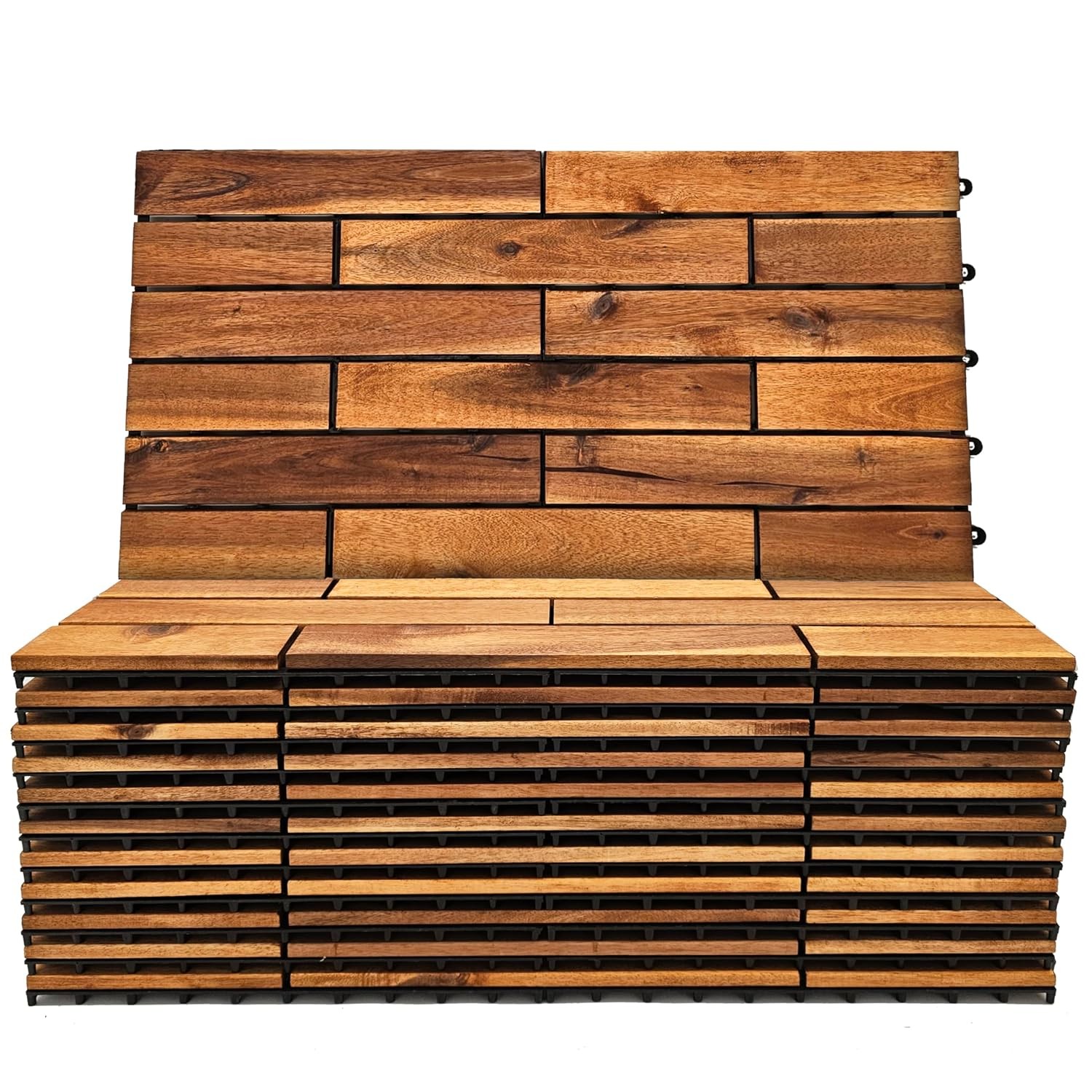
With real acacia hardwood construction and a premium brown finish, this 6-pack is the pricier path to a patio or balcony floor. The tiles use an interlocking peg-and-hook system for a tool-free floating installation, and each tile is 24 by 12 inches. The hardwood surface delivers a natural warm appearance that's a clear step up from a printed wood-grain pattern. The trade-off is area: this set covers a much smaller footprint than the foam option, so it's best for a compact project like a small balcony or entry. If you're planning a large deck, you'll need to think about how many sets the space requires.
Final Choice by Use Case
Choose the foam floor tiles if you want to cover a larger indoor space with an easy-to-clean surface for a lower listed price. Choose the acacia deck tiles if you want a real wood look and feel for a small outdoor patio or walkway, and you're willing to pay more for a premium finish. For a playroom or home gym, the foam tiles' easy-to-clean surface and DIY setup are strong draws; for a deck or balcony, the acacia wood's natural texture is the selling point.