When you're choosing among lumber panels and composites, the main decision isn't just wood species. You also have to choose between a long panel and a compact sheet, and between the thinnest sheets and the thickest slab. The four PureBond project panels here cover that spread, with listed prices ranging from $12.82 to $40.40.
All four panels are listed as new and rated for interior exposure, so the meaningful differences come down to face wood, panel size, thickness, and price.
Quick take
- Largest and thickest: the mahogany panel is the only long panel in the group.
- Middle ground: the poplar panel gives you a compact sheet with more body than the thinnest options.
- Lowest listed price: the red oak panel is the most affordable.
- White oak in a compact size: the white oak panel is priced just above.
Listed price comparison
| Product | Listed price | Price bar | Key specs |
|---|---|---|---|
| PureBond Mahogany Plywood Project Panel (3/4 in. x 2 ft. x 4 ft.) | $40.40 | 48 in. x 24 in., actual thickness 0.703 in. | |
| PureBond Poplar Plywood Project Panel (1/2 in. x 2 ft. x 2 ft.) | $16.37 | 24 in. x 24 in., actual thickness 0.453 in. | |
| PureBond Red Oak Plywood Project Panel (1/4 in. x 2 ft. x 2 ft.) | $12.82 | 24 in. x 24 in., actual thickness 0.203 in. | |
| PureBond White Oak Plywood Project Panel (1/4 in. x 2 ft. x 2 ft.) | $14.17 | 24 in. x 24 in., actual thickness 0.203 in. |
Decision matrix
- If your build calls for a full-length face with maximum thickness, the mahogany panel is the only option with that combination.
- If you want a compact sheet with more body than the thinnest panels, the poplar panel is the middle-priced choice.
- If the listed price is the priority, the red oak panel is the least expensive.
- If white oak is the look you want in a compact panel, the white oak panel matches that need.
Product notes
PureBond Mahogany Plywood Project Panel
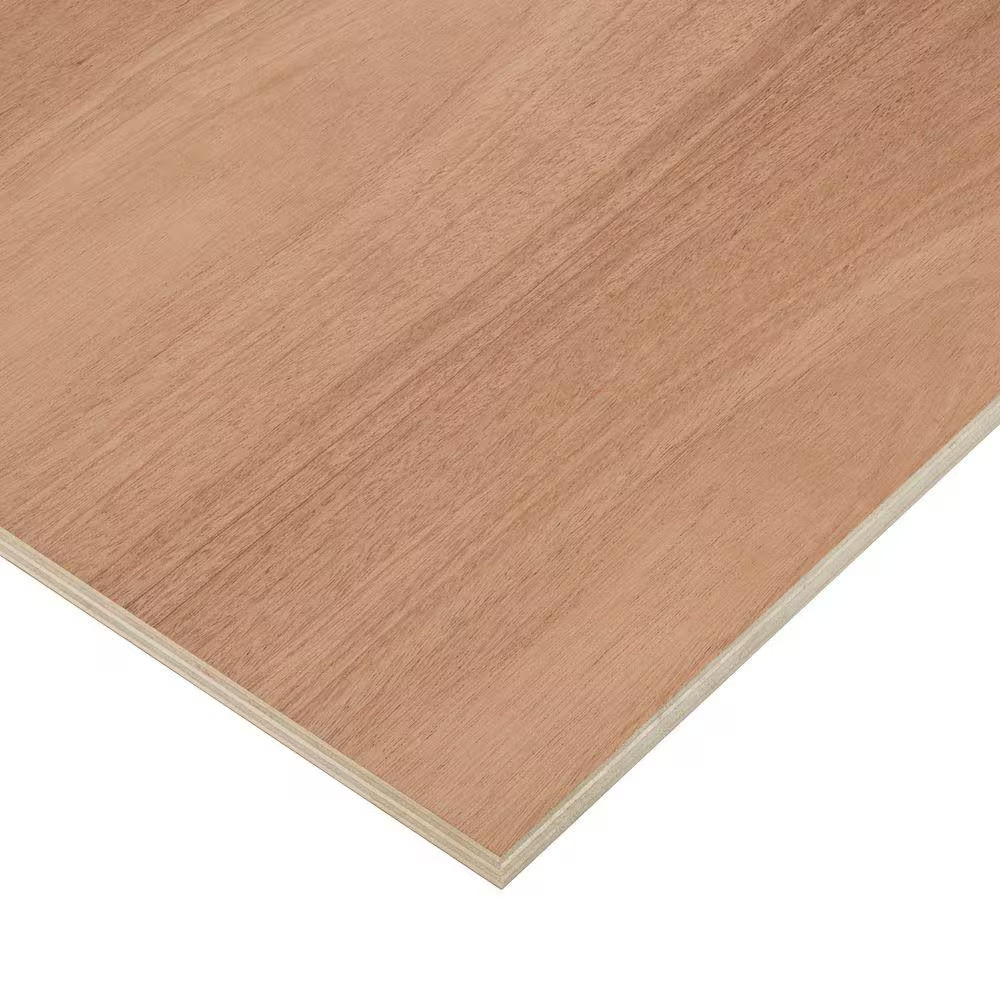
This is the standout for anyone who needs a long, thick hardwood-faced panel. The nominal 3/4-in. thickness (actual 0.703 in.) and 48-in. by 24-in. footprint give it the most surface area in the group, and the mahogany veneer is visually distinct from the lighter oak and poplar faces. The trade-off is the listed price: it is the highest of the four, so you are paying for the extra length and thickness. If your project only needs a compact sheet, this panel may be more than you need, both in size and in cost.
PureBond Poplar Plywood Project Panel
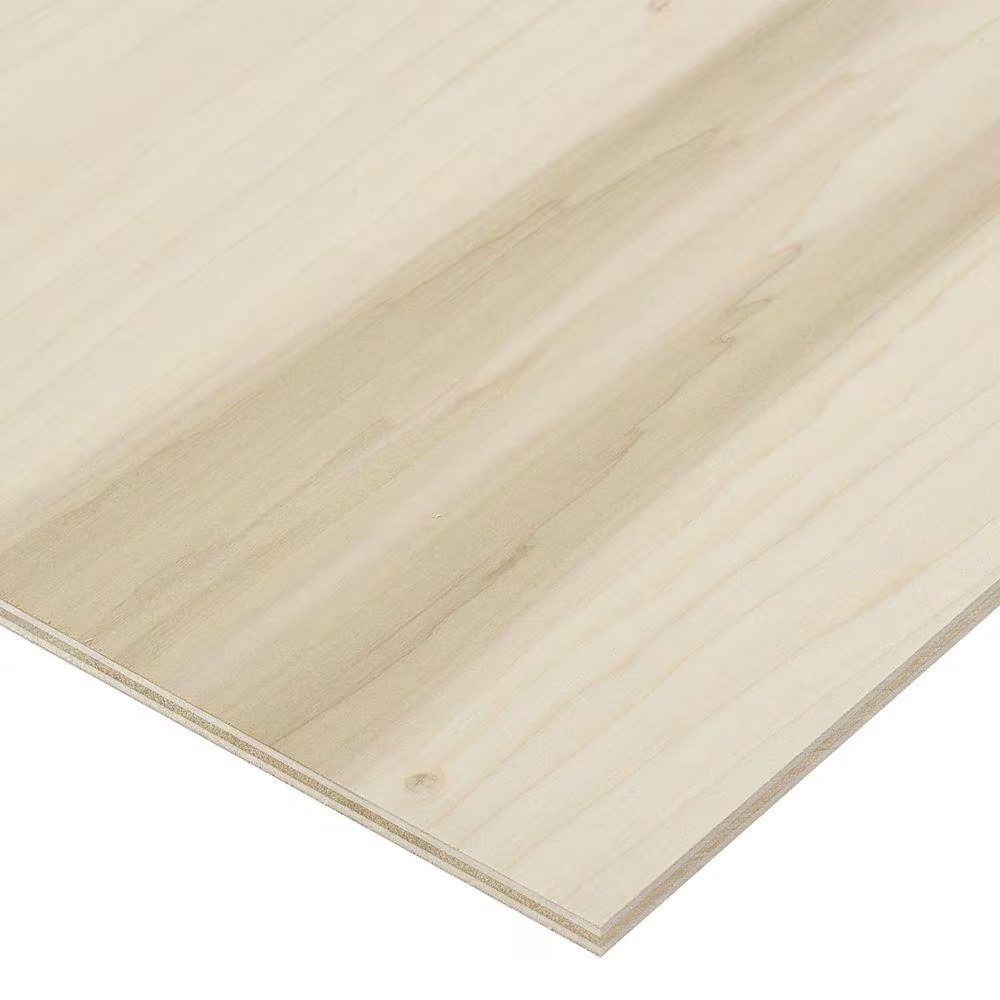
Poplar is a practical face for painted cabinets and furniture, and this 1/2-in. panel is built with poplar veneers on both sides in a 5-ply construction. The actual thickness is 0.453 in., so it has noticeably more body than the 1/4-in. oaks. It is listed at the middle price point of the four. The 5-ply layup ties into the poplar strength and durability story. The limitation is the 24-in. by 24-in. footprint: it won't cover the same surface area as the longer mahogany panel. For small drawer fronts, cabinet ends, or hobby-scale builds, this is a middle option.
PureBond Red Oak Plywood Project Panel
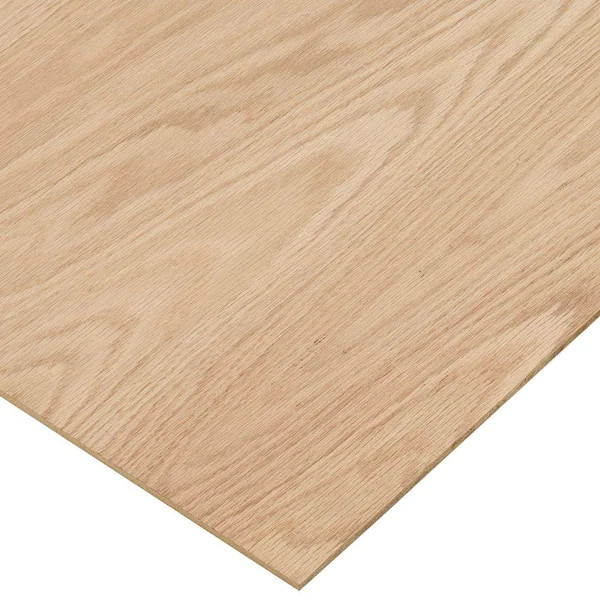
If you want a red oak face and a compact 24-in. square, this panel is the least expensive of the four. The 1/4-in. actual thickness (0.203 in.) makes it a thin facing material, so it suits cabinet backs, craft panels, and projects where the panel will be supported by a frame. The core is yellow poplar, and the adhesive is formaldehyde-free PureBond. The trade-off is the thin profile and small footprint: you give up the extra body of the 1/2-in. poplar and the longer reach of the mahogany panel. This is the easiest pick when the project doesn't demand thickness.
PureBond White Oak Plywood Project Panel
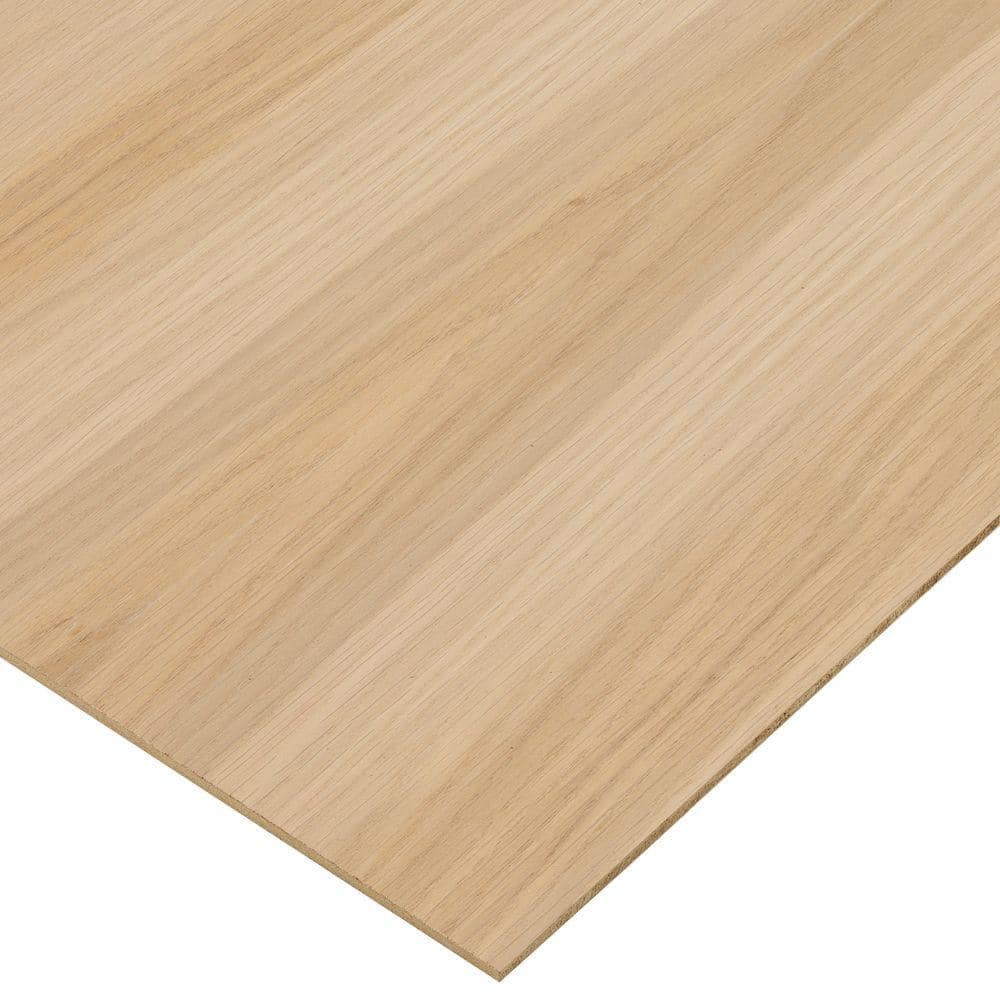
This white oak panel shares the same 1/4-in. thickness and 24-in. square size as the red oak panel, but it is listed just above it in price. The formaldehyde-free adhesive is built for higher moisture tolerance, and the multilayered construction is meant to be less prone to warping than solid wood. That makes it an interesting option if you want white oak veneer in a compact format. The limitation is the same thin profile: plan on using it as a facing or in a framed assembly rather than as a thick structural panel.
Final recommendation by use case
For a large-format build where you need one continuous panel with real thickness, the mahogany panel is the one to plan around. For a compact panel with more body than the thinnest options, the poplar panel is the middle-ground choice. If you want to keep the listed price as low as possible and red oak works for your project, the red oak panel gets you there. And if white oak is the look you need, the white oak panel is the matching compact option.